



Signup for our Newsletter!
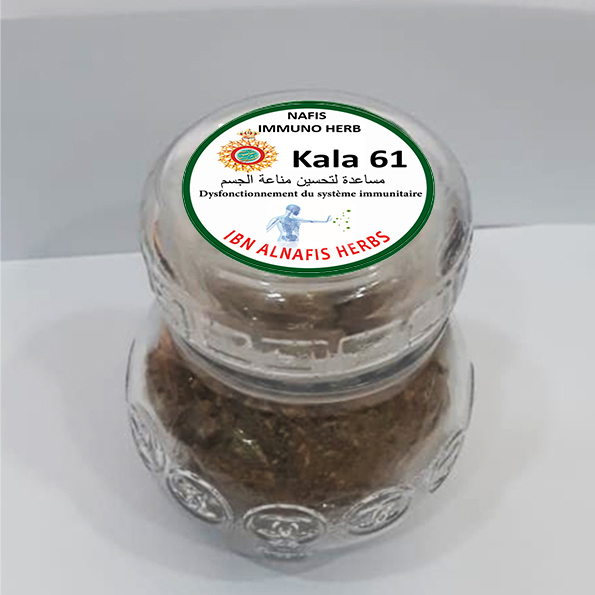
Pack Weight: 50g .
Price : 58 $ USD
Composition :
Panax ginseng / root
Cnicus benedictus / leaves and flowers
Calendula officinalis / flowers
Echinacea purpurea / roots
Crataegus azarolus / flowers
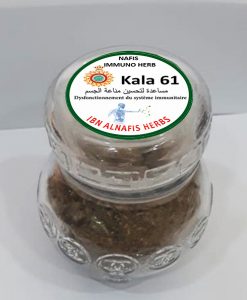
TEA 61 : Herbal infusion made from natural medicinal plants, free of side effects.
Indications :
– Immune system disorders.
– Autoimmune skin diseases (Behçet’s disease, bullous epidermolysis, scleroderma, psoriasis, vitiligo, eczema).
Benefits :
– Modulates immune response toward balance: acts as an immunostimulant in cases of immune deficiency and as a selective immunomodulator, helping destroy anti-antibodies that prevent cytotoxic T lymphocytes from eliminating tumor cells.
– Reactivates the immune system to fight tumor cells more effectively.
– Stimulates antibody production to fight bacteria, virus-infected cells, and environmental toxins.
– Controls free radicals and inhibits excessive inflammatory responses.
– Relieves chronic inflammation by stimulating anti-inflammatory gene expression and inhibiting pro-inflammatory mediators. While inflammation helps us survive, when chronically activated, it becomes a major risk factor for many diseases.
Enhanced effect:
The effect of TEA 61 is further improved when taken with:
– Tea 8 (for fatigue and asthenia).
– Cream 207 & Soap 307 (for psoriasis, ichthyosis, vitiligo).
– Cream 231 & Soap 331 (for eczema).
– Tea 35 (for liver disorders).
Immunity is the body’s ability to resist harmful microorganisms such as viruses and bacteria. It includes:
– Non-specific components acting as barriers or pathogen eliminators.
– Specific components tailored to each encountered pathogen.
Innate Immunity:
Formed by primitive bone marrow cells programmed to recognize and react to foreign agents through physical, chemical, and cellular responses (skin and mucous membranes, cytokines, antimicrobial substances, fever, and phagocytosis).
Adaptive Immunity:
Involves lymphocytes trained to distinguish between self and foreign elements.
Key organs of the immune system:
– Bone marrow and thymus (produce lymphocytes).
-Spleen, lymph nodes, tonsils, and lymphoid tissues in mucous membranes (digestive, respiratory, genital, and urinary tracts).
Types of immune response:
- Non-specific: via inflammation and interferons
- Inflammation increases capillary permeability to facilitate phagocyte action.
- Interferons inhibit viral replication inside infected cells.
- Feverenhances immune reactions and slows pathogen replication.
- Specific: via B and T lymphocytes
- B cells (10%) produce antibodies that bind to antigens and trigger destruction.
- T cells (80%) include cytotoxic cells (destroy virus-infected and cancer cells) and helper T cells (coordinate immune regulation).
The immune system memorizes past infections with up to 10⁹–10¹¹ different proteins. The second encounter is always faster and more effective.
Reviews
There are no reviews yet.