



Signup for our Newsletter!
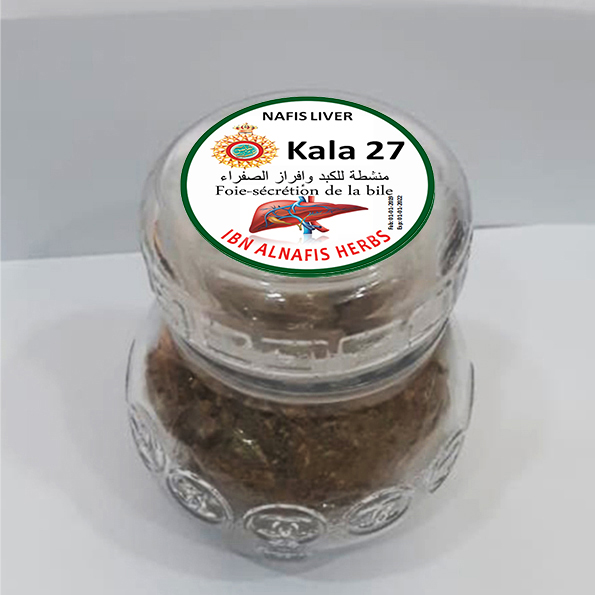
Pack Weight: 50g .
Price : 18 $ USD
Composition :
Achillea millefolium / leaves
Artemisia absinthium / flowers
Peumus boldus / leaves
Mentha piperita / leaves
Marrubium vulgare / aerial parts
TEA 27 : Herbal infusion made from natural medicinal plants, with no side effects.
Indications :
– Activation of liver secretions.
– Liver detoxification.
– Bile secretion deficiency.
– Supportive treatment in various liver diseases.
Benefits :
– Stimulates liver functions and promotes bile secretion.
– Detoxifies the liver by eliminating toxins and metabolic waste.
– Supports the treatment of hepatitis and hepatic steatosis (fatty liver).
– Improves digestion and absorption of fats and fat-soluble vitamins.
Enhanced Effect:
The effect of TEA 27 is more beneficial when combined with:
– TEA 35 for liver inflammation.
– TEA 61 for chronic hepatitis.
– TEA 31 for emotional instability.
– TEA 8 for fatigue or asthenia.
– TEA 57 for vitamin and electrolyte deficiencies.
Liver Function:
The liver is the largest abdominal organ (~1.5 kg), located in the upper right quadrant, partially protected by the ribs and separated from the heart and lungs by the diaphragm.
It has two main lobes (right and left), plus the caudate and quadrate lobes, and consists of 8 segments.
At its base is the gallbladder, connected to the liver via the biliary ducts. Hepatic cells secrete bile into bile canaliculi, forming the right and left hepatic ducts, which merge into the common hepatic duct, then join the cystic duct (from the gallbladder) to form the common bile duct, which finally joins the pancreatic duct and opens into the small intestine.
The liver is intimately linked to the intestine, filters and processes carbohydrates, lipids, proteins, synthesizes bile for fat absorption, stores vitamins, and is central to immune tolerance.
It filters 1.5 to 1.8 L of blood per minute and is involved in over 1000 vital functions.
Nutritional Function:
– Carbohydrate metabolism (gluconeogenesis, glycogenesis, glycogenolysis).
– Lipid metabolism (cholesterol synthesis and conversion to bile acids, triglyceride and lipoprotein production).
– Storage of fat-soluble vitamins (A, D, E, K) and glycogen.
Synthetic Function:
– Produces transport proteins (albumin, apoproteins, VLDL) and bile.
– Synthesizes bile acids from cholesterol.
– Involved in fetal hematopoiesis (WBC and RBC production).
Blood Function:
– Produces coagulation factors (fibrinogen I, III, V, VII, IX, XI).
– Destroys aged red and white blood cells.
– Converts toxic bilirubin (from RBC breakdown in the spleen) into non-toxic conjugated bilirubin.
– Regulates blood sugar:
– Hypoglycemic via glucose storage (glycogen).
– Hyperglycemic via glucose release (glycogenolysis), using glucose-6-phosphatase.
Endocrine Function:
– Converts cholecalciferol into calcidiol, the active form of vitamin D.
Antitoxic Function:
– Destroys toxins and metabolizes drugs into active forms.
– Responsible for hepatic clearance.
– Converts ammonia into urea.
Storage Function:
– Stores vitamin B12, iron, and copper from red blood cell recycling.
Liver Disorders Include:
– Viral hepatitis (A, B, C, D, E, G).
– Alcoholic hepatitis.
– Drug-induced hepatitis (paracetamol, halothane, aspirin, tuberculosis antibiotics).
– Liver fibrosis and cirrhosis.
– Hepatic steatosis (fatty liver).
– Autoimmune hepatitis.
– Wilson’s disease (genetic copper accumulation).
– Hemochromatosis (intestinal iron overload → cirrhosis).
Symptoms of Liver Dysfunction:
– Pain in the upper right abdomen.
– Severe fatigue and mental exhaustion (brain chemistry alterations).
– Hepatic encephalopathy (toxin buildup affecting brain function).
– Bleeding or bruising (due to reduced clotting protein synthesis).
– Itchy, irritated skin with flaky patches.
– Edema (due to protein production/circulation disorders).
– Dark urine, pale or white stools (bilirubin accumulation).
– Unexplained weight loss and appetite loss.
– Hormonal changes:
– In women: abnormal menstruation, amenorrhea, breast atrophy.
– In men: testicular atrophy, scrotal swelling, gynecomastia.
– Weakened immunity, increased infection risk.
– In 50% of cases, hepatic failure leads to renal failure (hepatorenal syndrome).
Recommendations:
– Follow a specific liver-friendly diet.
– Walk regularly – sedentary lifestyle is harmful to liver health.
– Physical inactivity increases the risk of fatty liver and steatosis.
– Fasting is an excellent detox method.
– Meditation improves focus, reduces aging effects on the brain, and lowers anxiety.
– Keep in mind: proper diagnosis and medication are means, but Allah the Almighty is the Only Healer.
Reviews
There are no reviews yet.