



Signup for our Newsletter!
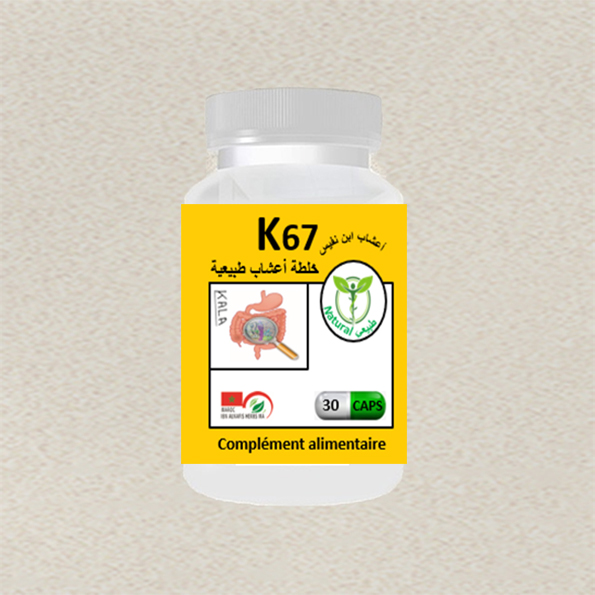
30 Capsules Small
500mg /capsule
Price : 30 $ USD
Another size
30 Capsules Big
775mg / capsule
Price : 45 $ USD
Composition:
Malva silvestris / flowers (mallow)
Salvia officinalis / leaves (sage)
Thymus serpyllum / leaves (wild thyme)
Foeniculum vulgare / fruits (fennel)
Cnicus benedictus / leaves (blessed thistle)
KALA LOVE 67 :
Product based on natural medicinal plants, belongs of the third drug generation, it is without side effects, adjuvant in the treatment : digestive system disorders.
Indications :
- Indigestion problems.
- Gastroduodenal ulcer.
- Gastric ulcer.
- Intestinal hyperpermeability.
- Helicobacter pylori infection.
- Functional dyspepsia.
- Gastroparesis.
- Gastric neurosis.
- Intestinal inflammation.
- Pancolitis.
- Irritable bowel syndrome.
- Gastroenteritis.
- Functional colopathy.
- Infections by various enterobacteria (Escherichia coli, Salmonella).
- Gastroesophageal reflux.
- Malabsorption due to enzyme deficiency.
- Celiac disease (inflammation of intestinal wall due to gluten intolerance).
- Enterocolopathy linked to rheumatism.
Gastritis:
Inflammation of the stomach lining, manifested by heartburn or digestive difficulties. It may be caused by alcohol, nonsteroidal anti-inflammatory drugs (NSAIDs), bacterial infection with Helicobacter pylori “HP,” or significant stress and anxiety.
HP Infection: A Gram-negative pathogenic bacterium responsible for gastritis, gastro-duodenal ulcers, gastric adenocarcinomas, and low-grade gastric lymphomas. Its main location is in the antrum with hypersecretion of acid; it induces secretion of gastrin and somatostatin. It penetrates the protective mucus layer of the stomach against acidity; when this layer disappears, it causes lesions of the stomach’s inner lining.
The patient becomes predisposed to duodenal and pre-pyloric ulcers. Gastric atrophy and decreased acid production may occur. HP produces ammonia and can survive in the acidic environment of the stomach; it also produces cytotoxins and mucolytic enzymes (protease, lipase) that contribute to ulcer formation. Infected individuals are 3 to 6 times more likely to develop stomach cancer.
KALA LOVE 67 Benefits:
– Activates neuro-immune mechanisms involving the TRP/TR1 nervous system, promoting the synthesis of phagocytic cells targeting harmful bacteria and parasites responsible for gastrointestinal infections.
– Stimulates death receptors on infected cells, inducing apoptosis and limiting the spread of pathogenic agents.
– Improves gastric motility and mechanical function, contributing to the prevention of digestive allergic reactions.
– Promotes repair of the gastric mucosa in cases of gastritis and protects it from the deleterious effects of ammonia produced by Helicobacter pylori.
– Exerts a protective “gastric dressing” effect on the digestive mucosa by stimulating mucus production, forming a barrier against the corrosive action of pepsin and hydrochloric acid.
– Protects against gastroesophageal reflux, enhances gastric blood perfusion, and thereby contributes to the prevention of gastric ulceration.
– Inhibits the activity of urease produced by Helicobacter pylori, preventing the breakdown of urea into ammonia and carbon dioxide, maintaining gastric acidity and creating an environment unfavorable to bacterial proliferation.
– Modulates intestinal flora balance by promoting beneficial (probiotic) bacteria and limiting pathogenic strains, while strengthening intestinal immune function.
– Regulates cyclooxygenase enzyme activity, contributing to the prevention of intestinal inflammatory processes.
– Balances gastric secretions, particularly in cases of hypersecretion such as Zollinger–Ellison syndrome, and contributes to pH regulation in gastric disorders.
– Stimulates the production of digestive gastric juices through specific bioactive compounds, contributing to the elimination of pathogenic microorganisms and parasites, notably Candida spp. and Helicobacter pylori.
– Soothes digestive spasms and reduces gas and bloating through the synergistic action of sage and peppermint.
– Contributes to the balance of the intestinal microbiota, which plays a key role in digestive, metabolic, immune, and neurological functions.
– Helps prevent bowel transit disorders and reduces the risk of intestinal obstruction.

Reviews
There are no reviews yet.