



Signup for our Newsletter!
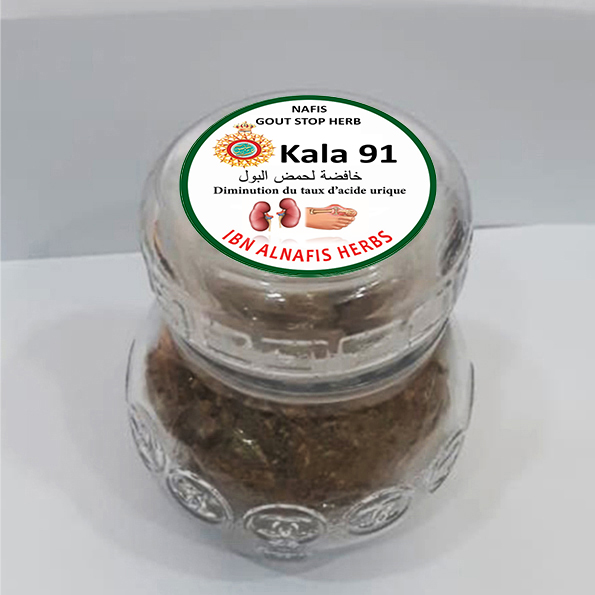
Pack Weight: 50g .
Price : 25 $ USD
Components :
Medicago sativa dried/plant
Amni visnaga/fruits
Equisetum arvense/stems
Taraxacum officinalis/roots
Zea mays / Silk
TEA 91 :
Infusion based on natural medicinal herbs with no side effects
Indications :
- Gout disease
- Hyperuricemia (elevation of uric acid levels in the blood)
- Joint pains due to the accumulation of mineral salts or trace elements
Enhancing Effects:
The effect of Tea 91 is more beneficial if taken in addition to the following:
- Renal or urinary infection, Infusion 36
- Nephritic colic, Infusion 53
- Urinary stones, Infusion 2
- Musculoskeletal pain, Infusion 11
Contraindications:
- Children under 12 years old
- Pregnant women
- People suffering from heart disease
Gout:
A chronic inflammatory disease related to the metabolism of uric acid, with the most characteristic manifestation being an acute monoarthritis of the big toe. Uric acid precipitates as crystals in the coldest joints subjected to microscopic trauma (big toe). The arthritis can affect the foot, knee, hand, elbow, and wrist. Without treatment, it progresses towards uric acid deposition in joints (gouty arthritis), skin (tophi), and kidneys (practical nephropathy), leading to potentially fatal terminal kidney failure.
Uric acid is present as a soluble monosodium urate salt, but when its level exceeds 7 mg/dl, the urate becomes insoluble, and the crystals then deposit in the joints (gout attack) and kidneys (kidney stones).
The crystallization of uric acid originates from the breakdown of purines or purine nucleotides (adenine and guanine) found in cells or food. Gout can be triggered when many cells are destroyed (cancer treatment) or from high consumption of meat and shellfish. However, gout due to excessive uric acid levels is rare, as most high levels are due to renal insufficiency from poor renal elimination or the use of medications, particularly diuretics, because these two substances with similar chemical properties must be eliminated by the kidneys, and the unexcreted uric acid accumulates in the blood.
Causes:
- Poor elimination of uric acid from the blood by the kidneys, especially in patients taking diuretics for extended periods
- Overweight
- Excessive uric acid production from protein metabolism
- Heredity: A genetic family factor causing enzymatic disorders in purine metabolism
- Diet rich in animal products (organ meats, charcuterie, sardines, anchovies), leading to a significant intake of purines
- Secondary gout caused by excessive destruction of cellular nucleoproteins due to:
- Lead poisoning
- Hemopathies (Vaguez disease, leukemia, myeloma, cytolytic treatments)
- Certain treatments (steroids, diuretics, thiazides). Acute renal failure, glomerulonephritis
- In children, Lesch-Nyhan disease, glycogen storage disease type 1
- Stress depletes the body’s antioxidants, and free radicals further damage cells, precipitating cell death and leading to uric acid formation.
- Risk factors include individuals taking diuretics, with family histories, or those affected by conditions like kidney stones, renal insufficiency, hypertension, metabolic syndrome, diabetes, obesity, hypercholesterolemia, and atherosclerosis.
Symptoms:
The patient complains of precursor signs: fatigue, flu-like symptoms, headaches. When a crisis occurs, it manifests as joint pain in the lower limbs, typically one of the big toes (56 to 78% of cases). Gouty swelling presents with sudden sharp pain and swelling of a joint, usually the base of the toe, sometimes affecting the ankles, heels, knees, and later the joints of the fingers and wrists, followed by complete functional impairment. The joint is inflamed (red, hot, swollen). A mild fever up to 38°C, sweating, and agitation may occur.
Initially, the attacks are spaced out (nocturnal crisis), and joints start to be affected. Tophi (hard or soft, painless subcutaneous nodules) appear in joints, on bones, in serous bursae, tendons, synovial sheaths, the ear helix, the back of the elbows, feet (Achilles tendons), and hands.
Pain typically starts at night and resolves spontaneously in one to two weeks. Over time, the crystals deposited in the joints can cause cartilage and bone destruction with pain at each movement, especially in the kidneys, where they can lead to progression to kidney failure. Uric acid can precipitate in the urine as stones (urinary stones), causing painful spasms (nephritic colic). In 10 to 30% of cases, the kidneys are affected, with uric acid deposits leading to interstitial nephropathy progressing to kidney failure and hypertension.
Eventually, the joints deform.
The disease becomes more common with age, is more frequent in obese individuals (metabolic syndrome), or in those consuming alcohol, red meat, seafood, or fructose.
Women are relatively protected before menopause due to the uricosuric action of estrogen (reducing uric acid levels).
Advice:
Diet has a real impact on this rheumatic disease, and hygienic-diuretic rules should be followed by limiting the consumption of foods or drinks rich in purines and favoring alkalinizing waters, unsweetened drinks, and purine-poor foods with vitamin C supplementation.
Avoid stress, which depletes the body’s antioxidants.
Treatments reduce the frequency of attacks but do not prevent the formation of uric acid crystals in the joints. The disease becomes more frequent with age and is more common in obese individuals (metabolic syndrome) or those consuming alcohol, red meat, seafood, or fructose.
Women are relatively protected before menopause due to the uricosuric action of estrogen (lowering uric acid).
Treatment:
Chemical treatment includes oral nonsteroidal anti-inflammatory drugs (NSAIDs), colchicine, which can help but with unbearable side effects. Steroidal anti-inflammatory drugs or corticosteroids are prescribed if other treatments are ineffective.
There are medications that increase the excretion of uric acid or decrease its production, but they are contraindicated in individuals with kidney failure.
Reviews
There are no reviews yet.